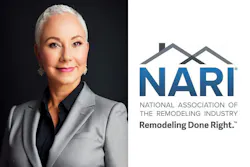
Pro Remodeler Talks with NARI CEO Lisa Sallstrom




Transcript
The remodeling industry is at interesting crossroads. Skilled labor is hard to find. Costs and affordability remain major concerns, and artificial intelligence is beginning to change the way remodelers and their customers approach projects. At the same time, aging housing stock and growing demand for aging in place and multi-generational living are creating significant opportunities. So, where is the industry headed, and how can remodelers prepare?
Hi, I'm Jay Schneider, senior editor for Pro Remodeler, and in this podcast, I'm talking with Lisa Sallstrom, who in June became the CEO of NARI, the National Association of the Remodeling Industry, where she's leading an organization with around 4,000 members. You'll hear Lisa and I talk about the biggest challenges facing remodelers, the opportunities ahead, what NARI is doing to help remodelers navigate these changes, and why trust, professionalism, and the homeowner experience may be more important than ever.
Jay Schneider: Hi, Lisa. Thank you for talking with me today.
Lisa Sallstrom: How are you? Thank you for your time.
JS: And thank you. So, my first question for you is: What are you hearing from your members regarding their biggest issues or concerns about the industry?
LS: So, Jay, I think the biggest concerns that we hear from our members is the availability of skilled labor, rising material and operating costs, affordability for homeowners, and economic uncertainty. But at the same time, remodelers remain Remarkably resilient demand is still there, but consumers now are becoming more and more deliberate about what they spend, and that means that making professionalism, trust, and the ability to demonstrate that they can deliver on expectations become increasingly important.
JS: So, how acute are you noticing that, and what is NARI doing to help ease the issue?
LS: The challenge exists across all skilled labor trades, experienced carpenters especially, and specialty trades. So, construction overall continues to face significant labor shortage. So, unfortunately, this isn't something that we feel any single organization can solve alone. NARI can certainly play a very important part and an important role in strengthening career pathways, supporting initiatives such as the Home Depot Path to Pro program, and elevating remodeling as a very desirable career for particularly students and early career professionals considering career pathways for themselves.
[The Path to Pro program is an initiative launched by Home Depot in 2021 that provides free skills training for the construction trades and connects job seekers with construction professionals looking to hire.]
JS: So, what emerging opportunities do you see for remodelers, and conversely, what threats and headwinds do you see them facing, and how are you helping them navigate those?
LS: So, I see one of the greatest opportunities is the aging housing stock combined with homeowners really choosing not to move, aging in place, energy efficiency, multi-generational living. These all create significant opportunities that we need to capitalize on. Now, conversely, the threats are largely around affordability, so financing costs, material prices, tariffs, and labor availability, and these are all of the things that I believe Nary can help members navigate through education that we offer, business resources, and the industry partnerships that we have, that all coupled together help to make the remodeling businesses even stronger.
JS: Do you see things getting better in terms of let's say tariffs or affordability?
LS: I'm not an economic expert, but I see fluctuations that we need to be prepared to act flexible around, and I think that combined with the fact that remodeling is still very very strong overall provides a very positive outlook for our industry.
JS: Kermit Baker, who is an economist and longtime housing and construction industry researcher, recently commented on the rise of private equity in new construction, but noted how less prevalent it is in remodeling, and citing the Renova failure as an example of how the two sectors are so different. Do you see private equity increasing its footprint in remodeling, and do you think it should?
LS: Well, that's a very interesting issue, interesting conversation. That's we'll see how it unfolds. I expect continued interest in remodeling because it is such a large and fragmented market, but remodeling fundamentally is different from new construction because it is intensely local, relationship-driven, and dependent on reputation, craftsmanship, and the homeowner's experience. Now, capital can help drive investment in technology and talent, and help scale, which are all very important components to a successful business. But the overall successful consolidation will still have to preserve those characteristics that make remodeling businesses successful in the first place-that being reputation, craftsmanship, and the homeowner experience.
JS: It seems like private equity hasn't always focused on the things that make remodeling firms special. So, does their potential refocus on the sector make you nervous, or do you think that private equity has learned their lessons and they'll do it better next time?
LS: Hopefully, the lesson has been learned so that they can do it better.
JS: You talked about how localized the remodeling firms are, but also the explosive growth in remodeling firms. I think it's at a record high of about 128,000 now. Do you see that as sustainable?
LS: Well, I think remodeling has, in general, a very low barrier to entry, and it becomes a very interesting business model for many local skilled trades people that want to venture out and start their own businesses, and I think that is a great opportunity for individuals to really become business owners. As you said, over the last 25 years, it has nearly doubled. But this means now, though, companies, in order to maintain a competitive advantage, they really need to think about what that means. And running their business professionally, with good financial discipline and the ability to differentiate themselves, will help to position themselves in an increasingly competitive marketplace. So, I see that yes, it will likely continue to expand, but those that really are able to do the differentiation and show that they can be relied upon for consistent homeowner experience over and over again, will be those that win out in a competitive marketplace.
JS: One of the ways that the industry is changing is that people are finding remodelers differently. Before they would Google, now they can ask ChatGPT or Claude, who's the best-rated remodeler in my area, who has the best results. So, how do you see AI affecting the industry and continuing to change the industry? And what are your members' opinions on AI?
LS: Well, I think AI has enormous potential for remodelers as well as every other industry. But for remodelers, particularly in estimating project management and administrative work, so for those small and mid-sized businesses that can translate into meaningful productivity gains, so our role at NARI is to help members understand where AI can create real business value while using it responsibly, rather than just simply chasing the next big technology thing.
JS: So, with regards to AI, we're hearing from a lot of remodelers who say that homeowners are creating their own designs, creating their own plans using AI, and then showing up at their firm saying, "This is exactly what I want and make it happen, and sometimes it's not realistic, and also it sort of excludes the remodeler from the design process. So, is that an issue that you're hearing from your members? The homeowner expectations versus reality.
LS: I think that all comes down to building relationships and building trust, because if you have the relationship and you have the trust and you understand ultimately what the goal is of the homeowner, you can get to the end result. And I know our remodelers are expert in being able to do that.
JS: And also, the design process is very important. Working with homeowners, remodelers, homeowners working together to create, you know, the project or home of their dreams, right?
LS: Design really, really becomes the forefront of what our professional remodelers do, and the creativity that is involved in taking something bare bones and making it look spectacular. The design is just a fundamental aspect of that whole process.
JS: How do you see the industry changing over the next three to five years? And with AI, it could change in a year.
LS: Oh, sure, sure. Well, I think we're seeing increasingly huge advances around technology-enabled businesses, and the change in the need for more professionally run businesses because of the consumers and the consumers' expectation for greater transparency, better Digital experiences and stronger proof of contractors' qualifications and reputation because of the increasing competitive marketplace. But at the same time, we are also seeing aging housing stock, changing demographics, and as a result, that should create substantial long-term demand for remodeling, even if we're seeing a slight variation in growth from year to year, over the long haul, I think remodeling has a great long-term trajectory.
JS: So, you've mentioned aging in place a couple times. Do you see that being a big driver for the next few years,
LS: I do actually, and this leads into what regulatory or legislative issues that we are focusing on. So let me kind of combine that into my answer on that. So Nary's focus is really on issues that directly affect remodelers' ability to operate successful businesses, at the same time improving homeowners' ability to actually remodel their homes. So both sides of the equation. What we're doing at NARI is we're strengthening our government affairs capabilities, and it's worked through the Small Business Legislative Council, so that we can identify issues where the remodeling industry has a distinct voice and where we can really make a difference. One of the new bills that has just been introduced in Congress is around multi-generational home renovation because of all of this aging in place that we're seeing and the need for homeowners to have access to more financial liquidity in order to do that.
[That legislation is the Homes Act, which stands for Multigenerational Housing Opportunities for Modifying Existing Structures. It was introduced October 1st by Congressman David Joyce of Ohio and Congresswoman Marilyn Strickland of Washington.]
JS: So, you're relatively new in your role at Nary. What changes do you want to make there?
LS: What I would like to see change is I would like to see beyond workforce and evolving customer expectations, the rising affordability pressures, business costs, technology changes. Our goal is going to be to stay close to our members to understand what those pressures are, and how we can have the greatest impact, and determine where we can provide the most meaningful value, but at the same time, I also want to build awareness among homeowners and consumers about the value of selecting a NARI member and a certified professional, because one of the things that ultimately NARI brings to the homeowner experience is a level of trust and code of ethics that all of our NARI members are asked to abide by, and that means that they can deliver, that they can provide the level of experience and expectation that the homeowner is looking for. That is so important.
JS: Do you think that homeowners know to ask for that, or do you think that remodelers need to mention it more, or where do you think that education and recognition comes from?
LS: I think homeowners are beginning to understand and realize NARI membership more and more. Do we have more work to do? Absolutely, and in getting our brand name out among homeowners, absolutely. I think the remodelers that are our members are doing a great job in carrying that banner. I have to say, our chapters are a fantastic way of making those local connections. Remodeling ultimately is a localized business where it's all about relationships, and really building on that, I think is important for the future of the organization.
JS: Are there any other initiatives or projects in the works, and if so, what are they in the timeline?
LS: Right now, we're looking at preparing for our annual conference, which is coming up in April. That is a major initiative. We're looking to add additional benefits to our membership. We're looking to really understand the member needs and help that market research inform what we are able to deliver on an ongoing basis to increase the value proposition of our membership.
JS: So, in terms of membership, are there initiatives to get more women and minorities involved as well?
LS: We understand that women and minorities are a small segment of our existing membership, and that is something that we're actively looking at addressing on how we are attracting those individuals to our membership. Absolutely, yes, that is a priority for the organization. Yes.
JS: Well, thank you, Lisa. I really appreciate you taking the time to talk with me today, and it was very nice meeting you.
LS: Very nice meeting you, Jay. Look forward to talking with you again sometime.
JS: Same here. Thank you.
Thank you for listening. You can find more about NARI on their website, NARI.org. That's N-A-R-I.org. Pro Remodeler is an Endeavor business media publication, and you can find more at proremodeler.com.
About the Author
 Jay Schneider
Jay Schneider
Senior Editor
Jay Schneider is the Senior Editor for Pro Remodeler. He can be reached at [email protected].