Report Shows Declining Immigration Threatens Construction Trades

Foreign-born workers play an outsized role in the construction trades in nearly every major metro area in the U.S., especially in lower-wage occupations such as painters, roofers, and construction laborers, according to the report The Outsized Role of Immigrants in the Construction Trades from the Harvard University Joint Center for Housing Studies. The report noted that a decline in immigration poses a threat to the residential construction industry.
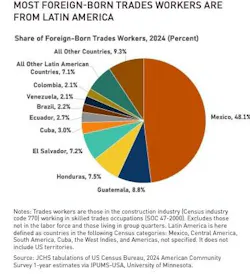
Most foreign-born trades workers are from Latin America
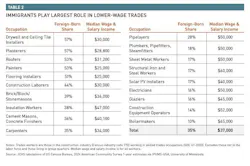
Immigrants play a significant role in lower-wage trades
In 2024, immigrants made up 35% of the trades workforce despite accounting for only 18% of the labor force. The foreign-born share of each trades occupation varied widely, from over 50% among drywall installers and painters to less than 20% among electricians and construction equipment operators. The occupations with the highest foreign-born workers are among the most physically demanding but also the lowest paying.
Drywall installers, for example, had a median annual income of $30,000 and painters had a median annual income of $25,000.
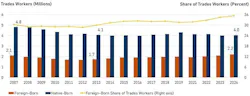
Share of foreign-born trades workers is growing
The share of foreign-born workers in the construction trades expanded following the Great Recession, from 30% in 2007 to 35% in 2024. Meanwhile, the overall trades workforce declined sharply during this period, losing around 1.1 million workers between 2007 and 2013. The trades workforce has since grown to around 6.2 million workers by 2024.
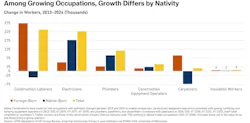
Number of foreign-born trades workers varies among occupations
Among the trades occupations where the workforce increased between 2013 to 2024, the growth varied by nativity on income levels. Construction laborers, for example, added the most workers (236,000; a 13% increase) entirely because of foreign-born workers. Growth among carpenters was similarly driven by immigrants. The fastest-growing occupations in percentage terms were electricians (41%) and plumbers (26%), where more than three-quarters of the growth was native-born. The native-born gains were offset by declines in other trades, leaving immigrants responsible for all net growth in the workforce overall.
Foreign-born trades workers are aging out of the industry
Growth in the trades workforce has depended on immigrants, but net international migration declined from 2.7 million in 2024 to 1.3 million in 2025 and is projected to drop an additional 321,000 by the end of this year. The projected level is well below historic averages and even below previous projections. With fewer immigrants entering the country and thus the construction trades, the majority of workers are middle-aged and older.
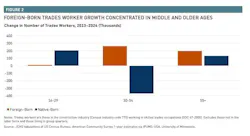
The trades workforce is therefore exposed to the effects of the recent decline in immigration, most of all in lower-wage trades occupations. Whether the construction trades workforce declines overall will depend on native-born workers entering the trades. And while the number of native-born workers has grown in some occupations (electricians, plumbers), it remains well below pre-recession level.