Remodeling Rundown: Remodeling & Home Improvement News
The Remodeling Rundown
A roundup of industry news from Pro Remodeler's editors and their chatbot buddies. All summaries are checked by professional editors.
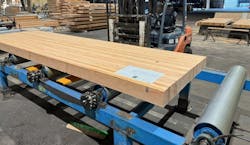
UC Berkeley Research Fuels Mass Timber Production and Decarbonization
ICE Raids are Disrupting Texas Construction Labor and Financing
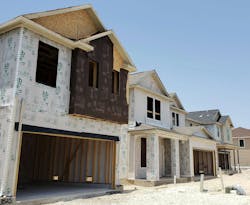
Source: Texas Public Radio, Construction site ICE raids hurting economy and building industry (Published February 4, 2026)
Immigration and Customs Enforcement raids at construction sites across Texas are causing workers to avoid jobs, slowing development and hurting the local economy, builders and business leaders say. The heightened enforcement is also linked to a decline in construction financing and rising costs for housing projects.
The deets: ICE is freezing TX construction
-
Builders, lenders, and South Texas business leaders report that ICE workplace raids are forcing workers — including those legally authorized — to stay away from construction sites, creating labor shortages.
-
Mario Guerrero, executive director of the South Texas Builders Association, said supply-chain firms are seeing sharp revenue drops and some are filing for bankruptcy; construction loans in the region have fallen about 30% over the past year.
-
Contractors and chambers of commerce note labor shortages, delayed schedules, and rising costs that can chill development projects by stretching timelines and increasing bids.
-
South Texas Democratic Rep. Henry Cuellar says he hears similar complaints nationally and wants federal officials to reduce ICE actions at job sites, drawing parallels to agricultural exemptions.
-
Industry groups and a Federal Reserve Bank of Dallas analysis warn that construction’s dependency on immigrant labor means even the perception of enforcement heightens absenteeism on job sites.
Why it matters: The labor supply is already stretched thin
The article notes that construction in Texas—particularly in major metropolitan areas—relies heavily on immigrant labor, with roughly 38.6% of workers in the Houston region foreign-born noncitizens. Heightened ICE enforcement and the resulting “chilling effect” are not only slowing project timelines and contributing to rising housing costs, but they are also weakening access to financing and threatening the viability of firms throughout the construction supply chain. Lawmakers from both parties are raising concerns at the federal level, underscoring that immigration policy and labor availability are closely linked to broader economic development and housing affordability challenges.
The source: https://www.tpr.org/border-immigration/2026-02-04/construction-site-ice-raids-hurting-economy-and-building-industry
Construction Unemployment Up to 5 Percent
Source: Engineering News-Record, Construction Unemployment Rate At 5% in December, Feb 5, 2026
The construction industry’s not seasonally adjusted unemployment rate was 5.0% in December, a slight year-over-year decline but a monthly increase from November, as headwinds such as material costs and labor shortages persist.
The deets: Multiple issues causing softness
-
The U.S. construction unemployment rate reached 5.0% in December, down 0.2 percentage points from the same month in 2024 but up 0.9 points since November.
-
Minnesota had the highest state construction unemployment rate, followed by Rhode Island and Connecticut; Hawaii, Oklahoma, and Colorado had the lowest.
-
Analysts cited weaker demand, tariffs, supply disruptions and rising insurance costs as ongoing industry cost pressures, contributing to employment challenges.
-
An economist noted that immigration enforcement has contributed to skilled worker shortages, pushing wages up.
-
Industry observers suggested that lower interest rates and the adoption of AI could help contractors reduce costs and improve productivity.
Why it matters: Construction is still struggling with labor
A 5% unemployment rate — slightly lower year over year but higher than the prior month — indicates the construction sector continues to struggle with labor market dynamics and softening demand. Persisting cost pressures from tariffs, supply chain issues and insurance, alongside workforce constraints, are shaping hiring trends and wage pressures. At the same time, the industry is watching broader economic levers, such as interest-rate cuts and productivity gains from technology, for potential relief in 2026.
https://www.enr.com/articles/62481-construction-unemployment-rate-at-5-in-december
Make America Skilled — But for Whom?
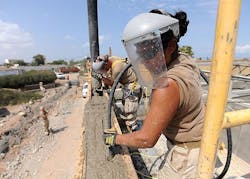
As demand for skilled labor grows, policy changes are reshaping how women enter the construction trades
Source: NPR, The Sunday Story — "Trump administration says skilled trades are the future. But how do women fit?" Feb 1, 2026
The Trump administration is championing skilled trades as the backbone of America's economic future, but its aggressive rollback of diversity, equity, and inclusion (DEI) policies is jeopardizing decades of progress for women in construction. Women in the trades describe meaningful gains over the past decades—safer jobsites, maternity leave, harassment reporting systems—but worry those improvements could stall or reverse. Veteran tradeswomen say the loss of targeted recruitment and support will make it harder to bring new women into the field and new skilled workers to jobsites.
What's changing: Feds not encouraging women in trades
-
Federal requirements for contractors to track hiring disparities and make good-faith efforts to recruit women have been rescinded.
-
Funding and partnerships tied to DEI are being cut, threatening organizations like Chicago Women in Trades.
-
Unions and contractors fear legal risk for maintaining women-focused programs, leading some to shut them down.
The White House argues that eliminating DEI would clear the way for "merit-based hiring" and a broader "golden age" of skilled labor, but has offered no specific plan to ensure women are included in that future workforce.
Why it matters: Construction labor crisis
Fifty percent of the population still makes up less than 5% of the trades workforce. Programs that helped women enter and stay in these high-paying jobs—often funded or encouraged by the federal government—are now losing support or facing legal uncertainty. That means fewer skilled tradespeople to build America.
Administration Moving to Bypass Some Local Permitting for Post-Disaster Rebuilding
Source: ICC's Building Safety Journal, Trump Administration Takes Limited Action to Override Local Permitting Rules, Feb 4
The Trump Administration has taken limited federal action to accelerate rebuilding after wildfire disasters by reducing delays in state and local permitting. The effort centers on allowing federal agencies to override certain permitting processes when they slow the use of federal disaster-relief funds.
The deets: SBA creates a narrow federal preemption path for disaster loans
-
On January 27, the President signed an executive order directing FEMA and the SBA to consider revising rules that could preempt state and local permitting requirements when those processes unduly delay federally funded rebuilding.
-
On January 28, the SBA issued an interim final rule allowing federal preemption of permitting requirements for projects approved on or after January 1, 2025, under its Disaster Loan Program.
-
The rule allows builders and contractors to self-certify compliance with building codes, safety requirements, and other substantive standards.
-
State and local requirements still apply, except for specific permitting or approval processes that the rule allows participants to bypass.
-
The SBA has published guidance and self-certification forms for recipients of the Disaster Loan Program and participating builders.
Why it matters: The move raises concerns about federal overreach while stopping short of broad change
The interim rule applies only to SBA’s Disaster Loan Program and does not establish nationwide federal preemption of state or local permitting. Even so, ICC’s Government Relations team is engaging with federal agencies and lawmakers to highlight risks to local building departments and is monitoring whether FEMA may issue similar guidance for its programs. Local builders have long prized their autonomy in setting building regulations, and it is unclear what precedents this would set for federal control over construction standards.
The source: www.iccsafe.org/building-safety-journal/bsj-news/trump-administration-takes-limited-action-to-override-local-permitting-rules
Roofer's Injuries 'Inconsistent' with "Running Into a Brick Wall While Handcuffed"

Source: ABC News / Associated Press, ICE claims that a man shattered his skull running into wall triggers tension at a Minnesota hospital, Jan 31, 2026
A roofer hospitalized in Minneapolis with severe skull and brain injuries became the focus of a dispute between health care workers and Immigration and Customs Enforcement over how he was injured while in federal custody. Nurses and doctors said the injuries were inconsistent with ICE’s initial explanation, highlighting growing tension between hospital staff and federal immigration officers during heightened enforcement activity in Minnesota.
The deets: Roofer brutalized, hospitalized, released
-
ICE agents initially told hospital staff that the roofer, Alberto Castañeda Mondragón, ran headfirst into a brick wall while handcuffed, a claim nurses said could not account for the extent of his skull fractures and brain bleeding.
-
Medical staff, an outside physician, and a forensic pathologist said injuries on multiple sides of his skull and widespread hemorrhaging were inconsistent with an accidental fall or collision.
-
ICE officers stayed at his bedside for days and restrained him in ways hospital staff said violated facility policies, leading to confrontations over shackling and patient care.
-
Hospital employees reported feeling intimidated by ICE’s presence, prompting new internal protocols and reminders that restraints require medical necessity.
-
A federal judge ordered Castañeda Mondragón released from ICE custody more than two weeks after his arrest; he was later discharged from the hospital with significant memory loss and a long recovery ahead.
Why it matters: Adds volatility to business and life
Local builders say heightened enforcement activity is already disrupting residential construction in Minneapolis, with subcontractors refusing to work, crews avoiding jobsites due to safety fears, and schedules beginning to collapse. One roofing crew cited in a recent business leaders call raised rates by 30%, reflecting labor scarcity that is pushing prices higher and timelines further out. Builders also raised concerns about jobsite liability and insurance responsibility when enforcement-related incidents occur, adding another layer of risk and cost for residential projects.
The source: https://abcnews.go.com/US/wireStory/ice-claim-man-shattered-skull-running-wall-triggers-129728439
Remodeling Growth is Slower Than Inflation
Source: Harvard Joint Center for Housing Studies, Remodeling Growth Set to Downshift in Late 2026 by Rachel Bogardus Drew, January 26, 2026.
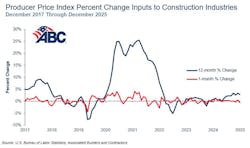
The Harvard Joint Center for Housing Studies projects that annual spending on home improvements and maintenance will continue to grow in 2026 but at a decelerating pace. Growth in year-over-year remodeling and repair spending is expected to ease from around 2.9 percent early in the year to 1.6 percent by year’s end, while total homeowner spending is still forecast to hit about $522 billion.
The deets: Remodeling is a dimming bright spot
-
The Leading Indicator of Remodeling Activity (LIRA) anticipates slower expansion in renovation and repair spending through 2026, with growth dropping from 2.9 % to 1.6 % over the course of the year.
-
Single-family home sales and permitting activity have risen modestly from very low levels, which should sustain a nominal increase in remodeling activity overall.
-
Despite the slowdown in growth rates, homeowner expenditures on improvements and maintenance are still projected to reach about $522 billion by the end of 2026.
-
Remodeling activity trends remain closely tied to broader housing market health, including interest rates, construction activity, and building materials sales.
-
Methodological adjustments were made to the LIRA due to delayed and missing data from the 2025 federal government shutdown.
Why it matters: Growth isn't keeping pace with inflation
This outlook suggests that while the remodeling sector will continue to expand in absolute spending through 2026, the pace of growth is slowing, reflecting broader housing market headwinds such as subdued single-family home sales and elevated costs. For industry stakeholders — including remodelers, suppliers, and policymakers — the forecast underscores a transition from the post-pandemic surge toward more modest, incremental growth. This has implications for business planning, labor demand, and investment in housing improvements, particularly as the health of the remodeling market remains closely tied to interest rate movements and overall housing market dynamics.
The source: https://www.jchs.harvard.edu/blog/remodeling-growth-set-downshift-late-2026
ICE Surge Disrupts Construction in Minnesota

Source: Finance & Commerce, ICE surge chills Minnesota construction industry, slows projects by Brian Johnson, January 20, 2026.
A surge in U.S. Immigration and Customs Enforcement (ICE) activity in Minnesota is prompting many construction workers — including those with legal authorization — to stay home, slowing project timelines across the industry. The increased enforcement presence has also strained worker-employer relations and reduced reporting of workplace violations.
The deets: Anxiety is high, especially in residential
-
Migrant tradespeople, including workers with valid work permits, are increasingly reluctant to show up at jobsites due to fear of detention, contributing to project delays.
-
Worker anxiety is diminishing reporting of wage theft and other workplace violations, undermining efforts to combat labor abuses.
-
Reports include the detainment of an asylum-seeking union member with full legal work authorization and the alleged racial profiling of workers by ICE.
-
Smaller contractors in homebuilding and specialty trades appear disproportionately affected as crews stay home and projects pause.
Why it matters: There is a housing crisis in the US
The ICE surge is disrupting Minnesota’s construction sector by exacerbating existing labor shortages and chilling workforce participation at a time when migrant labor is a critical component of the industry. These dynamics may ripple through housing and commercial development markets that rely on a stable and visible workforce.
The source: https://finance-commerce.com/2026/01/minnesota-construction-ice-surge-slows-projects/
Caterpillar expands autonomous machines for construction

Source: Caterpillar, Caterpillar Unveils the Next Era of Autonomy in Construction, January 7, 2026
Caterpillar announced a major push into autonomous construction equipment, unveiling a suite of intelligent machines designed to operate independently and reshape jobsite productivity. The initiative builds on decades of automation expertise and integrates advanced sensing, AI, and machine intelligence to automate core construction functions.
The deets: robots can dig precise holes
-
Caterpillar is introducing a range of autonomous machines — including excavators, loaders, haul trucks, dozers, and compactors — engineered to perform tasks like trenching, material handling, hauling, grading, and surface preparation without direct operator control.
-
These autonomous solutions use a combination of AI, machine learning, computer vision, LiDAR, radar, GPS, and high-resolution cameras to create a real-time, 360-degree awareness of jobsite conditions.
-
The new systems are part of more than three decades of Caterpillar’s research and development in automation, with roots in early GPS and perception work dating back to the 1980s.
-
Caterpillar’s autonomous fleet has been proven in mining operations, where it has moved billions of tonnes of material and logged hundreds of millions of kilometers.
-
The company plans to spotlight this autonomy push at industry events like CONEXPO-CON/AGG 2026, highlighting integration of fleet and site optimization technologies.
Why it matters: There are not many construction activities robots cannot do
This announcement underscores a pivotal shift in heavy equipment toward autonomy and intelligent operations. By embedding advanced autonomy into core construction machinery, Caterpillar aims to redefine jobsite productivity, safety, and precision — reducing reliance on manual labor for repetitive or hazardous tasks. The integration of AI and comprehensive sensing systems reflects broader trends in the industry toward digital transformation, with potential implications for labor dynamics, project efficiency, and overall cost structures on construction projects worldwide.
The source: https://www.caterpillar.com/en/news/corporate-press-releases/h/next-era-autonomy.html