Wildfire Resilience: Make Homes Easy to Save and Hard to Ignite

Ironically, wildfire is a problem partly because of fire suppression policies by forest managers over the past 100+ years. In 1910, a massive wildfire called the Big Blowup in the northern Rockies convinced federal forest managers to suppress all fire, no matter what. This led to the 10:00 am policy: if a fire isn’t out by 10 am the morning after a fire ranger’s daily report, resources would be doubled. It’s a pretty simple solution if resources are infinite and fires are relatively small. The problem with aggressive fire suppression is that more than a century of accumulated fuel has built up in forests, a problem that was already evident 20 years ago, before the effects of climate change blazed onto the scene. Now, the “fire season” is longer.
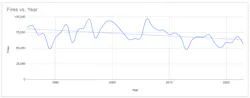
The number of fires per year has remained consistent or decreased slightly since 1983, when the National Interagency Coordination Center began collecting data.
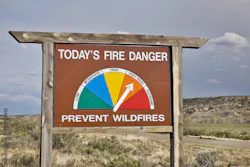
Expanding development in fire-prone landscapes not only adds fuel to the fire but also potential ignition sources. That last factor matters: in many communities, houses become the most combustible part of the landscape. Once a structure ignites, it doesn’t just burn—it produces embers and radiant heat that can ignite neighboring buildings, turning a vegetation fire into a structure-to-structure loss event. Structure density changes the equation. As one public-safety design professional noted while reflecting on Colorado’s Marshall Fire, tighter development patterns can create wind tunnels and shorten the distance between fuels. In those conditions, one home ignition can quickly become many.
Adding all those factors in, wildfire is now a much bigger and more complex equation.
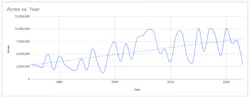
The fires are a LOT bigger now. According to National Interagency Coordination Center data, the area burned each year has more than tripled since 1983.
As CAL FIRE Division Chief Ben Nicholls puts it: “It’s not a matter of if, it’s when.” When that moment comes, chances are the resources won’t be doubled every day until the fire is out. Firefighters will not be able to save everything, so wildfire defensibility is about making your property easy to save and hard to burn. These home survival decisions are made long before that point: how the site is arranged, how the building is detailed, and how the property is maintained.

The cost is unsustainable. The National Interagency Coordination Center lists the costs associated with fighting these fires have skyrocketed more than an order of magnitude (12x—from 240 million to 3 BILLION) since 1983. This does not account for other costs not associated with fighting fire.
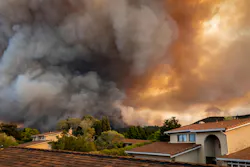
How homes ignite in wildfires: three mechanisms
In a typical “house fire, we think about fire inside the box,” as fire engineer Daniel Gorham at the Insurance Institute for Business & Home Safety (IBHS) describes it, “compartment fires where sprinklers and interior fire dynamics dominate.” Wildfire exposure is different. Structures in wildland settings tend to ignite through three primary mechanisms:
Radiant heat: A large flame front radiates heat just like a campfire—stronger when you’re close, weaker with distance. Different from a small campfire, or even a bonfire, tall flames can radiate enough energy to ignite materials without contact. Campfires don’t ignite the pile of firewood sitting next to them, wildfire can. The simplest way to control radiant heat exposure is distance: increasing separation between flames and the structure reduces radiant exposure.
Direct flame contact: Flames physically touch the structure—often when nearby fuels burn close enough to impinge on siding, windows, or the under-eave area. This is where defensible space and fuel management matter most.
Embers (firebrands): Small embers are the biggest problem: burning particles lofted by fire-driven winds. They can travel far ahead of the fire front and land on or around a home. Indirect ember ignitions (such as shrubbery or outbuildings) often create flames that then ignite building components by radiant heat and/or direct flame contact. IBHS testing and field evidence consistently point to embers as the dominant ignition pathway—both direct and indirect.
Gorham notes that up to 90% of home ignitions are attributed to embers, because they are a double threat, igniting two ways: Direct ignition, when embers land on combustible roofs, siding, decks, or enter vents and ignite combustibles inside; and indirect ignition, when embers ignite fuels near the home (mulch, needles in gutters, shrubs near walls), and those fuels ignite the structure. This is why wildfire resistance is not a single-product decision. It is systems design for ember exposure—especially in the first few feet around the building.
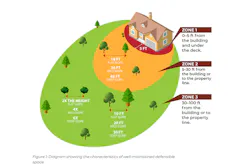
The home ignition zone
The most actionable framework in wildfire defensibility is the set of concentric zones radiating outward from the structure. The most important zone is also the smallest:
0–5 feet — the noncombustible zone
This is where homeowners and remodelers have the most control, and where embers are most likely to do their damage. The goal is simple: remove ignition opportunities right next to the building. That means keeping this zone free of vegetation, mulch, wood piles, planters and window boxes against the wall, brooms, yard toys, stored building materials, and anything combustible under decks
5–30 feet — defensible space zone
Reduce continuous fuels. Keep plantings spaced, pruned, irrigated, and maintained so fire doesn’t daisy-chain toward the house.
30–100 feet — reduced fuel zone
Remove heavier dead material and reduce fuel loading so large fire intensity drops as it nears structures.
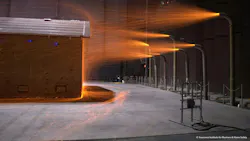
Ember protection: The roof is priority one
In a wildfire, the roof is the largest target and often the easiest place for embers to create a foothold. The vulnerabilities aren’t just the roof covering—they’re the places where debris accumulates and the details that create entry points. Key design and maintenance vulnerabilities include:
- Debris in gutters, valleys, dormers, and around skylights
- Plastic gutters that can melt
- Roof edges and overlaps that create channels (including some tile edge conditions)
- Skylights (often lower-rated than the surrounding roof.
- Under-eave areas where heat can be trapped
- Vent openings that allow ember intrusion into attics
Class A roof coverings help, but they’re not the end of the story if the gutters are full of needles. IBHS adds a key nuance: noncombustible gutters can actually shield fascia from flame exposure. Combined with a noncombustible cover to limit debris accumulation, gutters can be part of the solution. “Part” is the key word on that sentence. University of California Cooperative Extension’s Yana Valachovic makes that point blunt and practical: home design, maintenance, and construction matter more than any single fire-resistant product. Poor installation and deferred maintenance can undo otherwise good material choices.
Openings: vents, windows, doors—and the ember problem
Embers are small, so they don’t need a big hole. That makes roof vents a weak link. Gorham notes that gable, soffit, and ridge vents are all vulnerable in different ways. Mesh helps, but the real issue is what happens when embers get caught: they burn down, shrink, and can pass through the mesh. That’s why 1/8-inch or smaller metal mesh (or ember-resistant vent products) is a common recommendation. It’s not because the mesh stops embers entirely—it’s because smaller embers that do pass through have less mass and are less capable of igniting interior fuels.
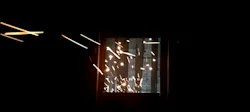
Embers can also accumulate at the base of doors or penetrate small openings and ignite the door jamb IBHS suggests fire-rated doors as the practical solution (given the limited noncombustible jamb options).
This is also why unvented roof assemblies have gained attention in wildfire contexts: removing the vent pathway removes one major ember entry route. But building an unvented roof is different from a typical vented one, and that's another topic.
Windows and skylights are also exposure points. Multi-pane tempered glass can better resist radiant heat and flame contact, reducing breakage risk. Once glazing fails, the building loses its defensive line and embers can enter freely.
Decks: treat them as an assembly, not a product
Deck conversations often fixate on the walking surface—wood vs. composite. IBHS testing suggests the more important variable is often the framing. Decks face two main exposures:
- Embers landing on top, falling between boards, igniting debris or joists
- Fire from underneath, creating sustained flame contact
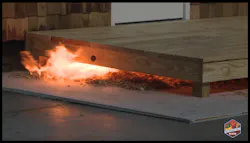
In lab testing, both wood and composite deck boards can lead to severe fire scenarios for the attached structure, especially when the framing is combustible. When decks are framed with metal, the risk profile changes significantly—even if the walking surface is still combustible. The assembly matters more than the decking brochure may claim. That's because embers landing on a flat decking surface are often blown somewhere else—like between the deck boards. When embers fall between boards they can ignite joists or underdeck combustibles. Speaking of underdeck combustibles, IBHS recommends enclosing low deck underspace with 1/8” or finer noncombustible mesh to reduce debris/ember accumulation. Another decking dilution is a solid walking surface —like a porch floor—with no gaps. This limits ember access to joists and space below. The best case, according to experts, is a noncombustible deck assembly (including structure and surface).
Flame protection: geometry traps heat
While the roof is a haven for ember ignition, walls are “suitable recipients of radiation and flame contact,” and combustible siding can quickly spread flames—exposing windows and eaves and cascading into greater damage.
IBHS explicitly flags eave geometry that traps heat under combustible soffits (and soffit vents pulling sure into them). Noncombustible soffits can mitigate this ignition potential. IBHS also flags bay windows as heat-trapping geometry and recommends enclosing them beneath with noncombustible materials.
Nicholls also frames defensible space in terms of terrain: as slope increases, separation needs increase dramatically because fire “leans uphill” and intensifies. The spacing rules he teaches are straightforward multipliers (2x, 4x, 6x plant height) depending on slope.
Even “fire-safe” landscaping is not magic. As UC Cooperative Extension’s Yana Valachovic emphasizes, there is no truly fire-resistant plant—only plant choices and maintenance practices that reduce risk. Low-growing, open-structured, high-moisture plants perform better, but any plant will burn under the right conditions.
Mulch is a perfect example: it retains moisture and helps plants, but it also burns. Bark mulch tends to burn less aggressively than pine needle mulch. Rock is better than both.
This isn’t just a Western problem anymore
The megafires of California (Tubbs, Nuns, Woolsey, Camp) forced national attention, but wildfire losses happen every year—and not only in the West. Events like the Pigeon Forge fire in Tennessee are reminders that changing fuels, longer fire seasons, and more houses made of wood with vented roofs, and swanky landscapes are pushing wildfire risk into places that historically could ignore it. Insurance-driven risk rankings have shifted accordingly, and while wildfire used to sit lower on “top threats” lists, now it is near the top.
Wildfire resistance is not a bunker aesthetic nor a heroic last stand. It’s the cumulative effect of a handful of disciplined decisions. In wildfire country—and increasingly beyond it—the winning strategy is not fighting fire at the doorstep; it is designing doorsteps that don’t ignite.
About the Author
 Daniel Morrison
Daniel Morrison
Editorial Director
Daniel Morrison is the editorial director of ProTradeCraft, Professional Remodeler, and Construction Pro Academy.