How Inclusivity Could Solve the Labor Shortage

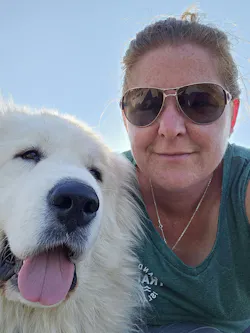
On a recent episode of the Women in Residential Construction podcast, Gena Hoyt, the owner of Big Dog Construction in Grand Manan, New Brunswick, talks about her experiences as a woman builder in a rural environment. She runs the company with her partner, Aron, who serves as the site supervisor. Gena wears many hats in the company’s operations. She handles design work, installation, scheduling, and social media, to name just a few.
While on the podcast, she enlightened us on the positives and negatives of running a business; using the internet to promote building science; and how her upbringing, determined personality, and educational background prepared her for a career in a largely male-dominated field.
Get Your Hands Dirty
I grew up on a fruit tree farm, so I was around tractors and equipment and different kinds of construction. You were taught how to fix things—you didn't always call someone to come do it for you. That led me into my formal education, which actually started in agriculture. I finished that after two years and then did a Bachelor of Business Administration at UNB here in New Brunswick.
So, I already had some formal education in running a business—project management, HR, accounting, all of those things. That set me up really well to work in construction, because I'm able to run the business side and do all the things that Aron doesn't really care to do.
At the same time, I'm happy to jump in and help out, learn new things, try new things. That's led me into being able to do custom tile work and more finish carpentry and painting. I was really never afraid to just step in and do it.
Wearing Many Hats Comes with Stress and Reward
Honestly, most days running the business are a dumpster fire. You have to be really good at triage and deciding what's important to do today and what actually needs to get done today. Sometimes my procrastination gets in the way of that, because there are things I don't like to do that I sometimes don't prioritize—which just inflames the dumpster fire.
But I love getting into a new project with people. I love meeting new clients and learning about them, learning about their lifestyle, learning about what they want from a new home or renovation, listening to their needs and how they're going to live and use the space, and then designing around that. That's probably one of the most fun parts of my job.
Educating Through the Internet
The BS + Beer Show is a grassroots movement started by a group of architects, builders, and people in the construction trades in the New England states. It's an informal gathering where building science and high-performance construction practices are discussed. During COVID, when they couldn't meet in person anymore, they moved it to Zoom. We were all glued to our laptops once a week, watching their BS + Beer Zoom show. It grew like wildfire—they started with just a few people, but everyone was sitting at home, so the audience exploded.
We're fortunate enough to know a lot of those people personally and consider them friends. So, three years ago, a group of us in Canada said, "Hey, we could do this here." It's sometimes hard with our population base to hold in-person meetings on a regular basis, so we do a Zoom show just like they do, and we also hold an annual in-person symposium.
We took the model they started in the US and just brought it here. Our focus is on education—getting information out to our builder community, making people feel welcome, and encouraging them to ask questions. It's the only way our industry is going to move forward and the only way we're going to get everyone on par with building better homes for people.
Aron’s daughter came to work with us in 2019, and she challenged him. She said, "I come to work with you every day, and you're teaching me all these things, and you're great at it. You should be filming it and putting it on Instagram—I bet you'd have a thousand followers within a month." She bet him he'd hit a thousand followers in a month, then helped him learn the technology and the platform. I think it took a little longer than a month, but he still honored the agreement—when he hit a thousand followers, he bought her a bottle of wine as a gift for spurring it on. Over the last five years, the account and the community have just kept growing.
How to Survive a Trade Career as a Woman
I am an atypical personality, and on top of that, I have red hair, and I'm very stubborn and very confident—so that has allowed me to deal with a lot of the conflicts and issues that some women face. I have friends who are in construction, boots on the ground, who are not as confident and not as outspoken as I am, and it affects them differently.
There are some areas of construction I think are more challenging than others. The commercial and industrial world is a lot harder for women to break into than the residential sector. In residential, you typically have people running companies who are more inclusive and more open to women being in the field.
But I've still had challenges—tradespeople who didn't accept that I was the boss, who didn't accept that I was the one telling them what to do. I've had suppliers and others with complete shock on their faces when they learned that I'm the one who owns the company and not Aron. But there have also been great people who helped me along the way, and great women I've looked up to and become friends with who helped me get through some of those harder moments.
It's hard to work in any field that's male-dominated. Some women can feel intimidated by being the only one, and I think a lot of companies—small to large—do a really bad job of making people feel included in their culture. That goes for anyone who feels a little different, but I think with women, it's just a little bit more.
Women need to understand and accept that we are different. Sometimes we do need more help. Sometimes we aren't as strong, and sometimes we can't do the things that men do—and that's okay. You need to be comfortable in your own skin and look yourself in the mirror every day and say, "I can do this."
That's the biggest thing most women struggle with: accepting the fact that they do belong. Normalizing women in the trades is really important, and being confident in the fact that you belong there will get you a lot further than almost anything else.
Inclusion means equity, not just equality
I think it's important for people to understand that getting women into construction is not as easy as they might think. A lot of companies have a problem with their culture, and they don't understand what it means to be equitable rather than just treating people with equality. If you want women to come into your company and stay—and, honestly, if you want anyone to stay, regardless of gender—you have to create an inclusive culture. You have to give everybody a fair fighting chance to perform their job despite their weight, size, height, or strength.
About the Author
 Tyler Rhyan
Tyler Rhyan
Associate Editor, Products Coverage
Tyler Rhyan is the associate editor for Pro Remodeler. He can be reached at [email protected].