Ben Bogie says "holy shit" a lot more than he used to. The director of building science at Building Performance Cooperative in Newtown, Connecticut, has been building AI systems into his company's field operations for the past year. He is not an evangelist. He is a building scientist whose brother works in theoretical computing, which means he approaches new tools the way he approaches new building assemblies: test them, understand how they fail, then decide. That method wreaks havoc on belt sanders but is a reasonable path for digital disruption. Ben has been muttering expletives a lot, not because he is a former carpenter, or because he is a parent; it is the speed and depth of change he keeps witnessing.
"... who could have ever anticipated what this was going to mean, or be, or feel like?" The speed of adoption among the public and raw computing power suddenly in the palm of your hand is surprising even to technologists, and neither is likely to slow down. However, accuracy isn't necessarily built in, so that's something that needs to be managed. Mark McClanahan, CEO and President of Mosby Building Arts in St. Louis, Missouri, made a rule for his AI complex: if it is not 90% certain of something, it should ask.
"The last thing I want to do is say we've got this great new tool, everybody loves it and uses it for three weeks, and then it stops working," Bogie said. That is not a cautionary tale. It is a methodology. And contractors who adopt that methodology now—experiment, break, diagnose, improve—while the tools are still maturing, will be a decade ahead of the competition in a few years. If you’re planning to retire soon, now might be a good time to do it.
AI is already at critical mass
The tech is moving fast, and the temptation is to wait for VHS and Betamax to sort it out. But the sorting is over. Every adoption wave has outrun the one before it: the telephone took about 67 years to reach half of American households, electricity about 43, radio and television about nine, the internet about eight, the smartphone five. Generative AI beat all of them. Within two years of ChatGPT's launch, it was in the hands of roughly 40 percent of working-age American adults, spreading faster than the personal computer or the internet did at the same age, according to a Federal Reserve and Harvard study. Mass adoption has already happened. Past tense.

The waves move faster because each successive technology required less friction to adopt. Electricity needed new wires on the telegraph poles. Phones needed lines on the same poles and a physical device in the home. The internet needed hardware, service providers, wires on the poles, and learned behavior all at once. AI needs a browser and a subscription—and those already exist. Contractors who are "watching and waiting" are using a mental model built for the telephone era. The window they think they have has already closed.
Chris Sever, president of Thompson Creek Window Company in the DC area, told me he thinks AI is the disruption, not the strategy. “The strategy is creating the best possible customer experience. AI simply gives us a much bigger set of tools to do that.”
AI wrecked call centers
Thompson Creek started with the customer and followed it into a vast AI infrastructure. "Our goal has been to meet people where they want to be met and let them interact with us in the way that feels easiest and most natural to them," Sever said. "What we are seeing is that customers consistently value responsiveness, convenience, clarity, and control. AI gives us the ability to deliver more of that, across more moments of the customer journey, in a way that can feel incredibly seamless."
Thompson Creek didn't just adjust the operation to add an AI widget; they restructured entirely around a technology that, as it turned out, homeowners actually prefer. Chief marketing officer, Alec Newcomb, presented the results at the Harvard Remodeling Futures Steering Committee last spring. Before the rollout, he said he would have told you there was no way customers would prefer talking to an AI. The data said otherwise. Satisfaction rates came in near 90 percent. Customers over 70 preferred the AI interaction to speaking with a human representative. “The story has become even clearer since Harvard,” Sever said to me recently. I mean, that was FOUR months ago—an eternity.
AI wrecked SEO
For the past decade, remodeling contractors built their lead generation on a straightforward model: rank well on Google for local search terms, get clicks, convert visitors into consultations. Thousands of contractors invested real money in SEO to own that funnel. AI is restructuring it from the top.
Google's AI Overviews now appear on roughly 43 percent of U.S. searches as of July 2026, up from about 15 percent a year earlier, and Google itself says its AI answers touch close to half of all queries. When an AI Overview shows up on a page, the organic click-through rate falls by nearly 60 percent. More than two-thirds of U.S. Google searches, 68 percent, now end without a single click to the open web. Service-plus-location searches, the exact queries remodeling contractors optimized for, are exactly where AI Overviews are expanding fastest: their coverage of commercial keywords grew 71 percent between November 2025 and April 2026. SEO investment doesn't evaporate, but the ROI math is different now, and contractors still running a 2021 search strategy are losing ground they can't see on their dashboards yet.
Google Ads are following the same path. Ads appeared on 26 percent of AI Overview search pages by October 2025, up from 5 percent in March of that same year, a 394 percent jump in eight months. That climb continued into 2026: through April, ads and AI Overviews turned up together on the same results page roughly twice as often as a year earlier. The paid search environment is migrating onto the AI results page, and if your Google Ads aren't optimized for AI, your ads won't show up or get clicked. The rules are still being written, but the direction is clear.
"People say they lost the job to AI," said Ashley Schaefer, co-owner of KBF Design Gallery, in Maitland, Florida. "They lost it to the four days it took them to respond, because in those four days the client kept designing without them. AI didn't beat anybody on quality. It beat us on latency."
There is a counterintuitive nuance worth noting: visitors who click through from AI Overview pages convert at dramatically higher rates than standard search visitors. The funnel is compressed—AI has cut a lot of the top off. Fewer people arrive at your website, but the ones who do are further along. That changes what your web presence needs to do: less volume play, more conversion architecture.
The compressed funnel creates a new problem for contractors who never solved the old one. Marcus Sheridan has been arguing for sixteen years that contractors who refuse to discuss pricing online are leaving money on the table. Now, he says, they're leaving their entire digital presence on the table. Sheridan is the author of "They Ask, You Answer" and the founder of Priceguide, a contractor pricing estimator platform with more than a thousand contractors. Sheridan has documented what happens to contractors who make the shift. Some were close to closing before adding a pricing estimator pulled their lead volume back. He has also mapped where this goes next: within two years, most homeowners will use an AI agent to vet contractors entirely, reading every review, running every interactive tool on every local contractor's website before presenting the homeowner with two recommendations and an offer to set the appointment. Contractors without pricing tools won't make that list.
AI wrecked the design consultation
Homeowners are arriving at first consultations having already used AI to generate renderings, explore finish options, and price alternatives. The contractor who can step into that conversation, take the client's AI output, build on it, and redirect it toward what's buildable, wins the project. The one who starts from scratch with a graph paper pad is a mile behind.
Schaefer says the sales consultation has fundamentally changed. "The client used to walk in with a magazine tear-out," Schaefer said. "Now they walk in with twelve renderings they made themselves. My job changed from 'here's what's possible' to 'here's which of these is real.' If you can't take what they made and move it toward something buildable quickly, you look like the slow option, and being the slow option is how you lose a job you were qualified to win."
She is careful about something contractors rarely discuss: the homeowner arriving with AI renderings is not just better informed. They are already emotionally attached to something that may not be buildable for the money they have.
"We used to charge a design retainer before we'd start designing," Schaefer said. "We've stopped charging it. We're doing more design for free now, except AI is doing the free part. The client who needs to see the kitchen three different ways before they know whether the price is worth it used to cost us days. Now we iterate in minutes. The real win isn't the free design. It's that we find out who our customer is, and isn't, in week one instead of week six."
"Our industry already lived through this once with design television," Schaefer said. "Everyone was sure HGTV would turn homeowners into DIYers and cut us out. What it actually did was create clients who knew what they wanted and wanted more than they could build themselves. This is the same thing at higher resolution."
KBF represents what leading-edge adoption actually looks like in a design studio: not a single tool deployed for a single purpose, but a reconfiguration of how the work gets done.
AI wrecked the sales process
Paul DesRoches is CEO of Moss Building and Design, one of the largest full-service design-build firms in the D.C market.
Over two decades of project data sit inside an AI tool DesRoches built and named Natalie. By the third week, the whole company was calling the software "she," and so was I on the call. Natalie lives on the homepage.

A potential customer can come to the site and have a short conversation with her about the project they're considering. Natalie can list the 45 projects like that in their town that the company has done, give them links to pictures of actual work, and help them figure out what level of finish and investment makes sense for what they want.
By the time that customer picks up the phone, they are deeply qualified. Some Moss salespeople even run their proposals through Natalie before sending them, a quick quality check to make sure nothing got missed.
What makes a homegrown bot worth building, DesRoches said, is the data underneath it. "The AIs out there are trained on publicly available information. You are what you're trained on. What's missing is the proprietary data sitting in corporate databases. That's where the real value is. Once you put AI on top of that, that's what we have: 7,000 projects, 25 years of experience."
Building Natalie wasn’t entirely smooth, but after pushing through the fog, he found a tool that does the early work of a senior salesperson, available around the clock. What surprises people, DesRoches said, is how little of this is expensive anymore. He built Natalie by “vibe coding” with Claude, describing what he wanted and letting the AI write most of it. Something that
would have taken a hand-coded development team the better part of a year, he estimates, now takes about two weeks, and the stack that runs it costs a few hundred dollars a month.
He has the background to judge the shift. DesRoches was a computer science major who spent a decade in software before he moved into remodeling, and he remembers what the old version of this cost. “I remember installing Oracle on a Linux system, and even then $5,000 for the hardware was a tremendous amount of money,” he said. “Just to get the simplest of all websites up, a basic login with some custom content, took six months.”
Now the barrier isn’t money or hardware. “It’s like when people say we
have more power in our smartphone than they had when they went to the moon,” he said. “That’s exactly what it is.”
Which reframes the wait-and-see math. If a mid-size remodeler can stand up a qualified-lead engine in two weeks for a few hundred a month, so can the shop across town. The cost of building has collapsed. The cost of not building is the part still going up.
Natalie also shows what happens when organizational knowledge becomes searchable. When a friend of DesRoches was considering purchasing a house, he ran the property details through Natalie. The company’s two decades of project data gave him an informed read on what he was looking at. The friend passed on the house, and Paul got a day back on his calendar
Reading the AI map
Not all AI is the same, and not all AI is at the same stage of development. One of the most useful things a remodeling contractor can do right now is stop thinking about "AI" as a single thing and start thinking about it as an ecosystem of technologies at very different points on the maturity curve.
At the risk of an overworked analogy: AI is not a toaster; it is electricity. The question isn't whether an electric toothbrush makes sense. The question is how you wire your business.
The contractors in trouble aren't the ones who adopted early and hit friction. They're the ones who look at the trough and conclude the whole category is worthless. Yes, next year's version of today's tool will be cheaper. And if you wait until next year, your AI tool will be one year less intelligent than the AI tools developed today.
The cautious play is to align your data: clean the inputs and define the outputs. Messy data will just confuse the AI, and that confusion will likely compound into bad outputs. If you aren't precise about what you tell AI to do, it will do whatever it wants within the parameters you set. Garbage in, garbage out.
How to build an ecosystem
Mark McClanahan understands the importance and AI potential of Institutional memory. "Every remodeling company has the same hidden cost," McClanahan said. "Institutional knowledge that only exists in someone's head, with much of it never written down." What he built is the Mosby Business Advisor: a company-specific knowledge base with specialist configurations layered on top for different roles. "I built it first as a strategic partner for our leadership team," McClanahan said, "one that carries the company's context so a conversation about business direction, a hiring decision, or a client issue starts from the same shared understanding every time."
From that foundation, Mosby built out role partners across the organization: specialists that help salespeople qualify and communicate with clients, help designers work through checklists and standards, help the admin team run workflows that used to be manual and repetitive. The same institutional memory is applied differently, depending on what someone does all day.
What surprised McClanahan wasn't the technology; it was what building it required. "Half the value came from being forced to write down things we'd been doing on instinct for years, at every level of the org, not just at the top." The risk, he says, isn't that AI replaces people. “It's that we keep pretending expertise is supposed to live and die with whoever happens to have it."
Michael Anschel took the opposite approach: more of a bottom-up adoption. The Minneapolis-based owner of OA Design + Build + Architecture builds small tools that solve specific problems, and he's assembled a library of them. One problem was plan set review. When you get a full set of blueprints for a remodeling project, somebody—the project manager—must go through every drawing and make sure every window on the plans matches the window order, every door matches the door order, every cabinet matches the cabinet order. It's tedious, time-consuming, and exactly the kind of detail that humans hate and an AI is good at.

Anschel built a custom AI tool to do that check. It catches obvious errors, potential errors, and flags items that could improve the project.
"It takes what is an arduous, boring, pain-in-the-ass task and gets about 80 percent of it done," Anschel said. "Catches some things they might not have caught, leaves their brain with enough energy to still look beyond."

In a recent run on a live project, the tool flagged 24 issues, including a direct conflict between a metal roof specified on one drawing and EPDM specified in the specs for the same flat roof. It also noticed that abbreviations used throughout the drawings were not listed in the project's abbreviations key. Anschel's reaction: "Stop being so human."

Another tool is for his field crew: a compatibility guide for flashing tapes and sealants. Some tapes have butyl backing, some have acrylic. Some sealants are silicone, some are latex. They don't all work on every substrate, and they're not all compatible. Instead of guessing or calling the office, a crew member can pull up the widget, describe what they need to stick to what, list what they have in the truck, and get the right answer.


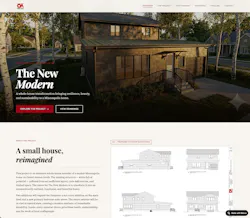
He also uses AI to build a small website for each project. The client gets a site that shows renderings, lists all the contractors, links to the Buildertrend project page, and serves as both a marketing piece and an information hub.
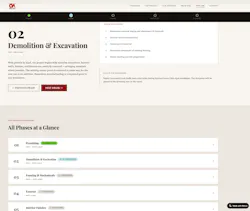
A design agreement generator pulls project specs, calculates phase costs, and produces a client-facing document laying out the design journey, hours, rates, and scope in plain language, with the legal contract embedded at the end. He handed it to his lead designer. The reaction: "This rocks."
"When you've been in business since 1947, and you're running five product lines across 130-some people, there's a real limit to how much any one leader can hold in mind at once," McClanahan said. "That's the problem I actually set out to solve."
AI may wreck your business model
Mid-size remodelers doing between two million and eight million in annual revenue are most at risk because they have enough overhead to be exposed to margin compression, but not enough scale to absorb it easily. Many of these businesses are built on relationships and reputation— genuine assets—but they haven't had to compete on operational efficiency because the market was good enough that it didn't matter. That contractor is about to find out it matters.
The lead generation model they relied on is changing. The customers arriving at their door are better informed and more demanding than they were just two years ago. Competitors deploying AI in sales, design, and operations are scooping up leads and running jobs at lower cost and higher margin. The relationship advantage didn’t disappear, but it is not sufficient anymore.
Begin by stopping the bleeding
Three things you can do Monday morning.
One: spend $200 and deploy an AI tool on your website. LeadTruffle, Modernize, and Sheridan’s Priceguide have contractor-specific configurations that can be live inside a week. The contractors using them report that a meaningful share of their best leads now come in between 9 p.m. and midnight, when no one was previously available to respond.

Two. Pull your Google Search Console data and look at click-through rates on your top local search terms over the past 12 months. If you haven't looked recently, what you find may surprise you. Understanding what's happening to your organic traffic is the prerequisite for deciding what to do about it.
Three. Call your best salesperson, your best project manager, and your best designer into a room and ask them each one question: what do you do repeatedly that you wish you didn't have to do? The answers to those three questions are your AI implementation roadmap.
Before you invest
Ben Bogie has another rule his engineer brother taught him: never be tool-bound. The most important decision he has made has nothing to do with which tool he chose, and everything to do with where the data lives. Everything his team builds, every workflow, every system, every document that passes through Claude, dumps to a physical RAID array that his company controls. If the tool disappears tomorrow, for any reason, the company's institutional knowledge goes nowhere. It stays on a server they own, backed up in the cloud.
"I never want to be tied to a tool," Bogie said. "Claude is just acting as the data passer across our database."
He has also deliberately slowed his own team's adoption. He is building internal systems, standards, and expectations before he asks anyone to depend on them. He and one trusted PM are running what he calls shakedown cruises, waiting for things to break and understanding why before they roll anything out company-wide.
"When they break, I want to understand why," he said. "So that we can maintain these things."
The Hype Curve
We have used this graphic before to talk about technology and will probably do it again. The chart comes from Gartner, a consulting company that knows a lot about a lot. Here, I use it to generally map where various AI technologies are in their development. The x-axis is visibility; the y-axis is time. In the case of AI, the time spread is about 3 years. In the case of electricity, it is closer to 45 years.
Peak of Inflated Expectations: Agentic AI systems, autonomous project management, AI-driven materials procurement. The tools work, but frequently don't do what we hope. That will change probably by the time this magazine reaches your mailbox.
Sliding toward Trough: AI chatbots and call center replacement. The technology works. Thompson Creek proves it. But average contractor implementation is hitting friction, integration costs, and the gap between what vendors demonstrate and what actually deploys. Successful users have already worked out the kinks—often by spending money. The out-of-the-box solution they now have will be available shortly.
Trough of Disillusionment: First-generation AI estimating tools. Early products over-promised. Some contractors got burned. With all AI tools, it is important to take responsibility for the output. Check the work—or better yet, have another AI check the work!
Slope of Enlightenment: AI-assisted design visualization and rendering. Plan set review tools like the one Anschel built. The consumer-facing design tools matured first; contractor-facing solutions are now practical for those willing to build them.
Plateau of Productivity: AI writing and proposal generation. These are mature, unglamorous, and widely used. Nobody is writing feature stories about them.
What is a RAID?
RAID stands for Redundant Array of Independent Disks. It stores data across multiple physical hard drives so that if one drive fails, the data survives on the others.
Companies use RAID arrays when they need storage that is both reliable and recoverable. In Bogie's case, that means every document, transcript, and workflow his team runs through an AI tool is written to physical hardware his company owns and controls, not stored exclusively in a cloud service that could change its terms, raise its prices, or disappear entirely.
From SEO to AI Optimization: Be the Answer Instead of the Search
Search engine optimization set out to improve your page’s rank. AI optimization aims to make your business the answer to the question. The playbook is changing on four fronts.
Publish the answers. AI will summarize content that directly answers a question. Cost ranges and project timelines are what these systems reward.
Structure for AI. Similar to SEO, clear headings, plain-language answers in the first two sentences of a section, and FAQ formatting make your content easy for an AI to cite.
Earn the citation. AI leans on authority signals: consistent name, address, and phone across the web, real reviews, and third-party mentions. These are the new backlinks. Clean them up.
Make your data available. A photo gallery with locations, finishes, and cost ranges gives AI specifics to pull when a homeowner asks for exactly that job.
Measure differently, too. Page rankings matter much less than whether or not you show up when a someone asks Claude, ChatGPT, or Gemini to find a remodeler. Start asking the AI yourself, and see who they name.
About the Author
 Daniel Morrison
Daniel Morrison
Editorial Director
Daniel Morrison is the editorial director of ProTradeCraft, Professional Remodeler, and Construction Pro Academy.